
How Forest Carbon Measurement Works and Why It Matters
July 17, 2026
Written by: Kelly Jorgensen, Forest Data Collection Manager
One of the most common questions we hear from landowners is: How do you know how much carbon my forest is storing? The answer starts with understanding what’s growing in the forest today and how that growth can translate into long-term carbon storage over time.
A Smarter Way to Measure Forests
As Forest Data Collection Manager, I oversee the processes and technology we use to measure and understand forest conditions across our Improved Forest Management (IFM) project. Accurate, field-based data is the foundation of everything we do, from estimating current carbon stocks to projecting future carbon sequestration potential.
To support this work, our team developed a patented device that streamlines forest inventory collection. Rather than relying on multiple tools and a registered forester in the field, a single handheld instrument captures the key information needed to assess forest conditions, including tree diameter, species, mortality, and defects
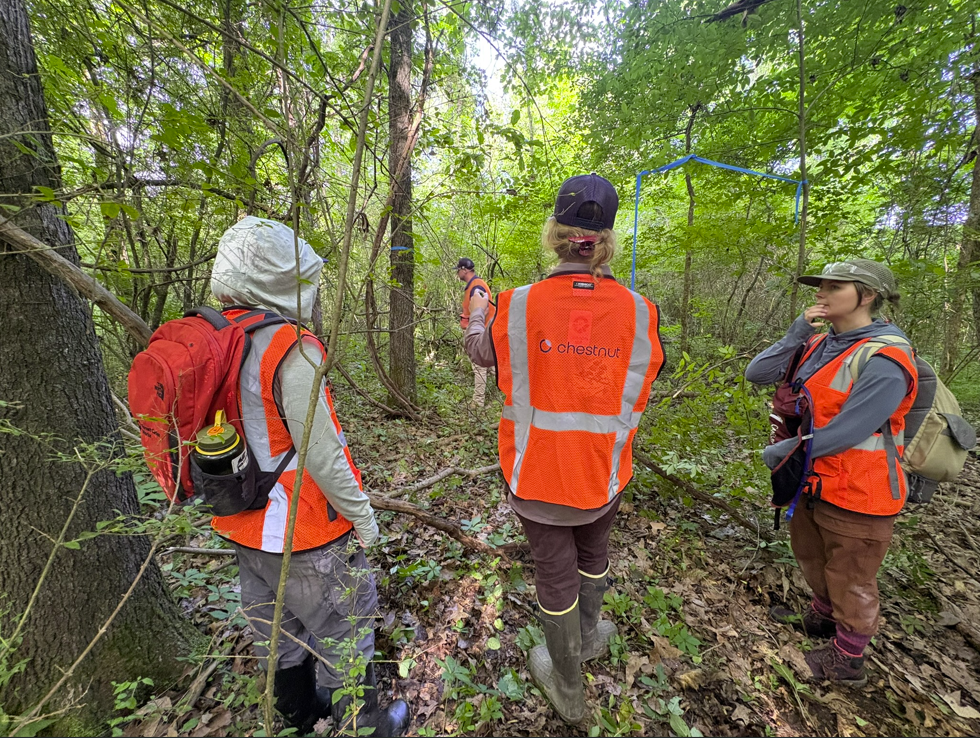
These measurements form the basis of a detailed forest inventory, which is then combined with our proprietary modeling tools to create property-level carbon sequestration projections. This allows us to quantify the carbon removals that underpin the high-quality carbon credits we deliver.
By combining innovative field technology with advanced analytics, we deliver high-quality, nature-based carbon credits backed by rigorous measurement and transparent results. Because the device is simple to learn and deploy, we train qualified technicians nationwide, making forest inventory data more efficient, scalable, and accessible to landowners across the country.
Why On-the-Ground Data Matters
Remote sensing and aerial imagery are valuable tools, but they can’t replace the precision of measuring real trees on the ground. Our approach combines site-specific field measurements with digital analysis, providing a more complete and reliable understanding of a property’s carbon potential.
This integrated approach helps landowners understand not only how much carbon their forest stores today, but how that storage may change over time. It provides:
- A reliable assessment of current forest carbon
- Transparent projections of future carbon sequestration
- Confidence in rigorous, defensible results
At the end of the day, good carbon projects start with good data. By investing in accurate field measurements and robust modeling, we’re helping landowners better understand the value of their forests while supporting the development of high-integrity, nature-based carbon credits.
To learn more about each phase of our technology-driven carbon capture process, explore our white paper.