
Employee Spotlight: Brian Anderson
April 7, 2026
Chestnut is comprised of a dedicated team with 75+ years of combined experience across fields including forestry, energy, land acquisition, and data science. We’ve developed and supported over 50 carbon projects across both compliance and voluntary carbon registries—bringing unrivaled rigor, transparency, and long-term thinking to nature‑based carbon solutions.
Our mission is to lead by example, acting with integrity and striving to be the preeminent nature-based carbon project developer, delivering the highest quality products to the market.
We’re spotlighting members of our team so you can learn how we do it.
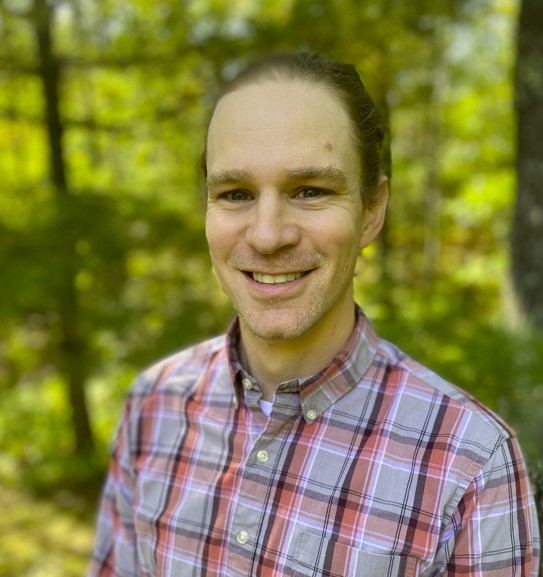
Brian Anderson
Senior Biometrician
Product team
Based in Rhinelander, Wisconsin
Brian Anderson brings deep expertise in forestry, forest inventory, and carbon modeling to Chestnut’s Product team. With a background spanning forest growth modeling, silviculture, and carbon project development, Brian plays a key role in ensuring Chestnut’s projects are scientifically rigorous and built for long‑term integrity.
When it comes to forest carbon, credibility starts long before a single credit is issued. It begins in the woods—measuring trees, understanding landscapes, and using data to tell an honest story about how forests grow and store carbon over time. At Chestnut, that responsibility sits in the expert hands of Brian and his team.
A Career Built in the Forest—and in the Data
Brian’s path to Chestnut began with a deep focus on forest inventory and analysis. Early in his career, he worked across forestry disciplines including forest inventory, growth modeling, and silviculture. He joined the Wisconsin Department of Natural Resources, where he served as forest inventory analyst, overseeing data collection across multiple inventory programs and leading analysis used by state decision-makers. That experience gave him a strong foundation in how to design forest inventories with efficiency and accuracy.
From there, Brian worked as a forest resource planning analyst for Finite Carbon, another nature-based solutions developer, focusing on forest carbon modeling and quantification and gaining experience in carbon project development. Across roles, one theme remained constant: using statistics and real-world forest data to produce trustworthy results.
Quantifying Forest Carbon with Precision
At Chestnut, Brian’s role centers on two questions with enormous implications: How much carbon is stored in a forest today? How much will it store in the future?
To answer those questions, Brian analyzes everything from species composition and tree density to soil type, climate, and long-term growth expectations. Using tools like R (a statistics program), the Forest Vegetation Simulator (FVS), and good old-fashioned Excel, he translates complex ecological systems into high-confidence, decades-out carbon estimates.
He also helps design and implement forest inventories—statistically sound sampling methods that allow Chestnut to estimate carbon stocks across large landscapes by measuring only a fraction of the total area.
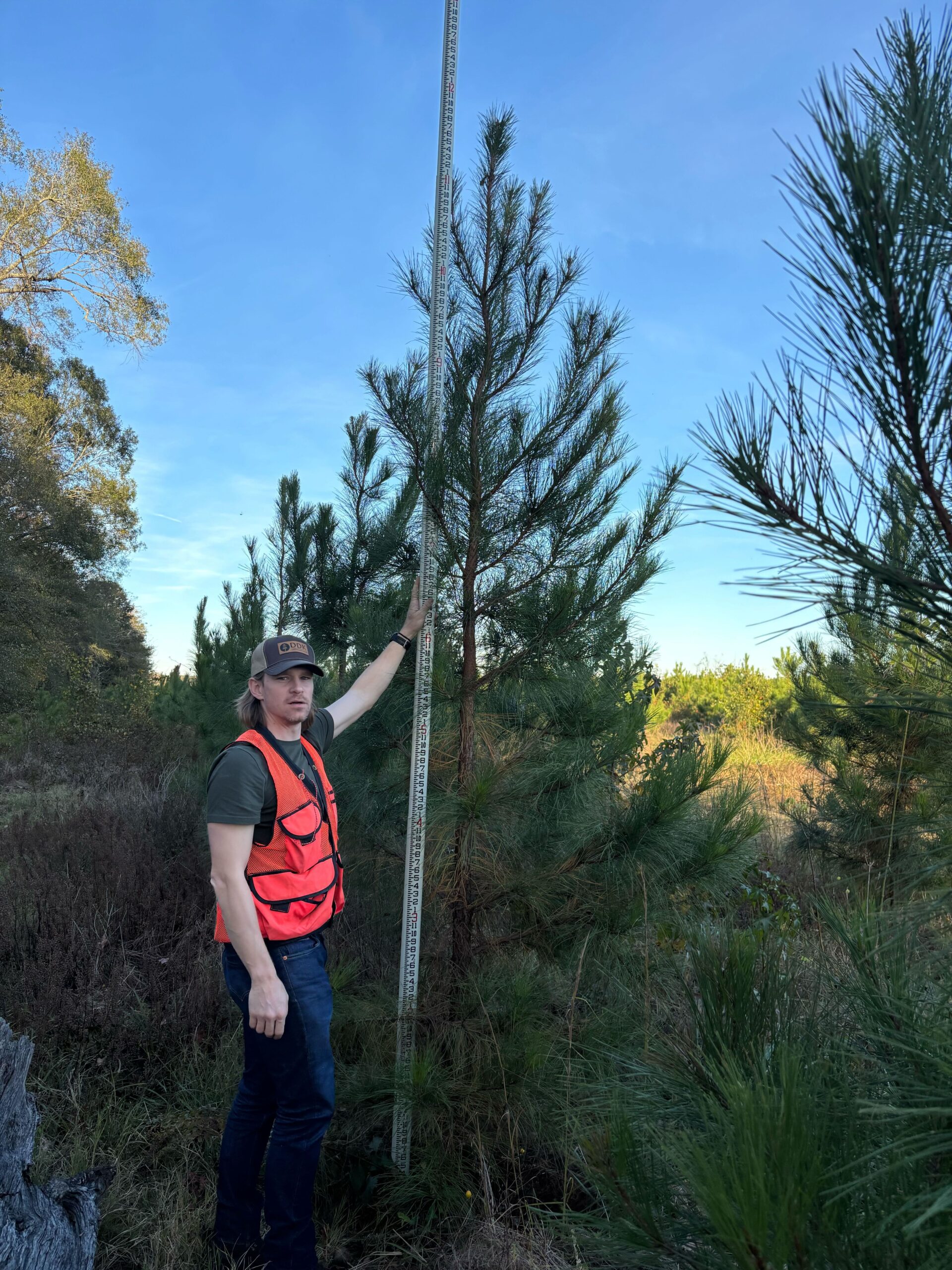
“These inventories are the backbone of carbon accounting,” Brian says. “If the sampling design isn’t right, nothing downstream works.”
Building Tools That Raise the Bar
Beyond project-level analysis, Brian is also a builder. He develops in-house tools that Chestnut uses across departments to evaluate potential project sites, compare scenarios, and design more effective workflows.
“The most rewarding part of my job is creating something useful—whether that’s a new tool or helping another team refine a process,” he says. “If it improves quality or efficiency, that’s a win for everyone.”
Brian has a mindset of continuous improvement—even when improvement isn’t easy.
One of the biggest challenges Brian faces is improving models and processes that are already validated. In forest carbon, once a modeling or quantification methodology has been verified, changing it means re-validation, added time, and additional scrutiny.
“It’s a balancing act,” Brian explains. “We want to keep improving our modeling, but we also have to respect the rigor of the verification process.”
He sees that challenge as worthwhile. Enhancements usually result in higher-quality projects and credits—reinforcing Chestnut’s long-term commitment to integrity over shortcuts.
Everyday Work with Enduring Impacts
So, what excites Brian the most about coming to work at Chestnut every day?
It’s knowing that his work contributes to long-term impacts, beyond even his own lifetime.
Through rigorous modeling, thoughtful inventory design, and continuous refinement, Brian helps ensure Chestnut’s projects deliver up to 100 years of durable carbon capture and storage. The forests he helps measure and model today will continue delivering environmental and climate benefits for generations—long after the work itself is done.
“Our projects are high-quality because of the processes and the people we have in place,” he says. “I get to work with great people within a culture that values continuous improvement. Chestnut’s focus on quality and integrity is built to last.”
Forest carbon capture depends on confidence: in the data, the models, and the people behind them. Thanks to the dedication of Brian and his teammates, Chestnut is proud to deliver that confidence.